
Personal Branding Photography: What Jessica Hanlon Says About Style, Strategy and Standing Out.
Personal branding photography has moved on.
It is no longer just about clean headshots, bright interiors and someone holding a coffee cup in the corner of the frame. The best personal branding photography today is more thoughtful than that. It is more strategic, more creative and far more connected to who the person actually is.
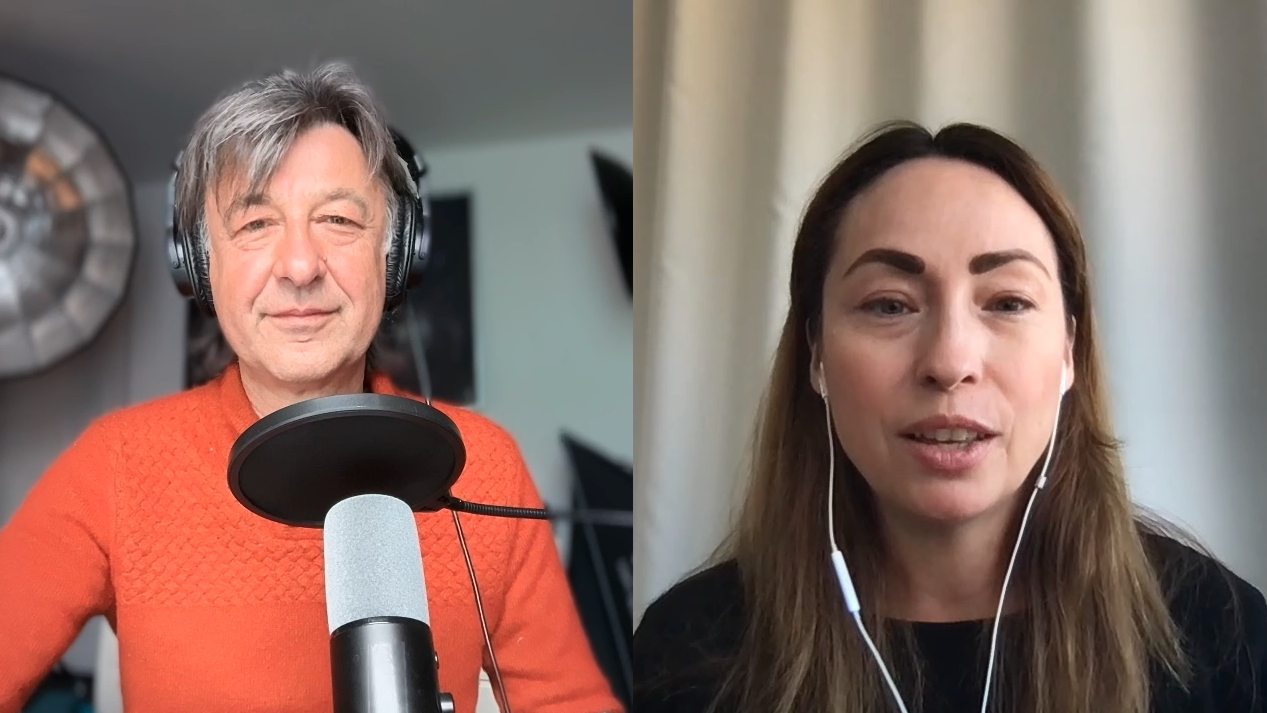
In a recent conversation on the podcast, I spoke with Stockholm-based photographer Jessica Hanlon about what makes brand photography work, why so much of it still looks the same, and how photographers can create stronger, more distinctive images for their clients.
Jessica brought a refreshing mix of creative instinct and marketing understanding to the conversation. She talked about brand photography not just as a service, but as a process of interpretation. That is what made this episode especially interesting.
From graphic design to personal branding photography
Jessica Hanlon is based in Stockholm, though originally from the US. She moved to Sweden in 2015 and began building her photography business there from scratch, without a local network and without speaking the language.
Her entry into professional photography came through an unexpected opportunity to shoot behind-the-scenes images for a haircare brand. Like many photographers, she began by photographing a range of subjects, including maternity, weddings and families, before gradually finding her place in personal branding photography.
What drew her to this niche was her background in graphic design.
That makes sense. Good brand photography and good graphic design have a lot in common. Both require you to understand the person or business, identify what makes them different, and then shape visual material that communicates that clearly.
That background seems to have given her a strong foundation for what she now does so well: helping entrepreneurs and business owners develop imagery that reflects personality, purpose and point of view.
Why does so much brand photography look the same?
One of the most interesting parts of the conversation was Jessica’s take on why so much personal branding photography feels repetitive.
At the surface level, a lot of shoots look polished. The lighting is nice, the styling is tidy, and the location is attractive. But often the work stops there. It looks good, but it does not necessarily say anything meaningful about the person in the frame.
Jessica made the point that photographers need to go deeper. The job is not simply to create attractive images. The job is to capture identity.
That means paying attention to more than visual trends. It means understanding the client’s personality, their business, the way they communicate, how they want to be perceived, and what makes them different from their competitors.
Without that, branding photography can quickly become generic.
Capturing identity, not just aesthetics
A key theme running through our conversation was the difference between photographing someone’s style and photographing their identity.
Jessica’s process starts well before the shoot itself. She studies the client. She looks at how they show up online, how they talk about their work, how their competitors present themselves, and where there might be space to create something more individual.
That kind of preparation matters.
As photographers, we are not just arranging people in flattering light. We are reading them. We are listening. We are trying to understand how to translate their character and brand into a visual language.
Jessica also spoke about body language, which I thought was an important point. Experienced photographers are constantly reading the person in front of them. We can sense discomfort, stiffness, hesitation and self-consciousness. In brand photography, that sensitivity becomes central to the process.
The camera records more than appearance. It records confidence, tension, ease, energy and intent.
That is one reason personal branding photography is harder than it looks.
Styling matters more than most photographers admit
Another strong point Jessica made was about styling.
She sees clothing as a major part of the shoot, not something secondary. In the early days, she often found herself frustrated when clients turned up in outfits that clearly had not been thought through. Over time, she realised this was really a preparation issue.
So she changed the process.
Now she helps clients prepare more carefully, gives them clearer direction and, where appropriate, connects them with a stylist. Not every client chooses to go that route, but the principle remains the same: what someone wears has a huge influence on the final images.
I agree with that completely.
Wardrobe affects everything. It influences mood, shape, colour palette, body language and the overall visual tone of the shoot. In personal branding photography, styling is not an add-on. It is part of the message.
Helping people become comfortable in front of the camera
One of the more thoughtful moments in the conversation came when I asked whether she tries to photograph who someone really is, or a slightly elevated version of themselves.
Jessica’s answer came back to trust.
Before the shoot, she spends time making sure clients feel supported and looked after. She stays in touch, gives them access to her, and tries to build confidence in advance. Once the camera comes out, she often begins with movement-based images to help people relax, especially if they are nervous.
That makes a great deal of sense.
Most people do not step in front of the camera feeling natural. They need time to settle. They need direction. They need permission to move, loosen up and stop worrying about whether they are doing it “right”.
In many cases, the photographer is not just observing confidence. They are helping create the conditions for it.
That is part of the value of the shoot.
Working light, staying flexible
Jessica shoots both in studios and on location, but she likes to keep her setup simple. She often works with natural light and a small flash, using minimal gear so the whole experience feels less intimidating for the client.
That approach suits personal branding photography well.
Large setups can sometimes make shoots feel overproduced, especially in public places or smaller interiors. A lighter approach often allows for more spontaneity and less self-consciousness.
She also spoke about the challenge of shooting in Sweden, where natural light is far more limited for much of the year than it is in the UK. That seasonal constraint shapes the kind of work she can offer and when she can offer it.
It was a useful reminder that our photography businesses are always shaped, in part, by practical realities: the climate, the architecture, the locations available to us, and the way people live and work in the places we shoot.
Why self-portraits can make you a better brand photographer
One idea I particularly liked was Jessica’s use of self-portraits as a creative testing ground.
Rather than waiting for the right client to come along, she experiments on herself. She tries out new lighting ideas, new visual approaches and new ways of presenting herself. Those experiments then become part of her portfolio, her marketing and her broader visual identity.
There is a lot of value in that.
It allows photographers to stay creatively active. It builds confidence. It helps develop style. And it shows potential clients what is possible beyond the obvious or expected.
Too many photographers wait for permission to create better work. Sometimes the smartest thing you can do is make that work yourself.
Personal brand photography is also about launches and campaigns
Another valuable part of the conversation was Jessica’s view that not every brand shoot is simply about creating a general library of images for a website.
Sometimes clients need photography for a specific launch, a workshop, a service promotion or a campaign. In those cases, the images need to do something more targeted. They need to support a message, a time-sensitive offer or a specific marketing goal.
That changes the role of the photographer.
Instead of just delivering a set of good-looking images, you are helping the client think more strategically. You are asking what the pictures are for, what they need to communicate, and how they fit into the broader way that business is marketed.
That is where brand photographers can become much more valuable.
The more you understand marketing, launches and content creation, the better you can serve the people hiring you.
How photographers can get more work
When I asked Jessica how photographers can get more work, her advice was practical and honest.
Talk more about what you do. Show people how you help. Use your content in multiple ways. Take one idea and turn it into a reel, a carousel, a blog post or a newsletter.
This is where many photographers still struggle.
They are often afraid of repeating themselves. They worry about sounding too salesy. They say something once and assume everyone has seen it. In reality, most people miss most of what we put out.
Jessica’s point was that photographers need to market more consistently and with more confidence. That does not mean shouting louder. It means communicating more clearly and more often.
The photographers who get remembered are usually the ones who keep showing up.
Finding your voice takes time
One of the most honest sections of the conversation came when Jessica talked about voice.
She said that when she first started building her personal brand, she had opinions, but she was too afraid to express them. Over time, that changed. Through content creation, podcasting and simply putting in the work, she became more confident in saying what she really thought.
That feels true for photographers generally, not just educators or podcasters.
You do not suddenly wake up with a clear voice. You build it through practice. You build it by making work, sharing ideas, refining your opinions and gradually becoming more comfortable with not everyone agreeing with you.
Photographically, the same applies. Style does not appear fully formed. It develops through repetition, experimentation and confidence built over time.
That is worth remembering in a field where so many people want instant clarity.
What is next for personal branding photography?
Towards the end of the episode, we talked about where personal branding photography may be heading.
Jessica’s sense was that the genre is becoming more conceptual, more mood-led and less literal. I think that is right.
The older visual language of personal branding photography often relied on a narrow set of cues: bright rooms, laptops, coffee mugs, soft smiles and tidy interiors. That style had its use, but it also created a lot of sameness.
Now there seems to be more room for experimentation.
Shoots can be more editorial. More atmospheric. More fashion-led. More emotionally charged. More abstract. More suggestive. They can communicate mood as much as profession.
That is an exciting shift because it opens the door to more creativity and stronger visual differentiation.
For photographers, it is a reminder not to confine themselves to what branding photography used to look like.
Final thoughts
What I took from my conversation with Jessica Hanlon was this: strong personal branding photography sits somewhere between strategy and intuition.
It requires visual skill, of course. But it also requires empathy, preparation, direction, curiosity and the willingness to go beyond formulas. The best work in this space is not just polished. It feels specific. It feels intentional. It feels like it belongs to that person and no one else.
That is what more photographers should be aiming for.
If you are working in personal branding photography, or thinking of moving into it, Jessica’s insight is a useful reminder that your role is not just to make people look good. It is to help them communicate who they are, what they stand for and why they matter.
And the better you understand that for yourself, the better you can do it for other people.
Listen to the full conversation
This conversation was part of the branding photography season of the podcast, and there was plenty more in the full episode around creativity, concept development, content creation and finding your own voice as a photographer.
If you want the full discussion, head over to the podcast and have a listen: