
Flash is just a tool. What you do with it is everything.
The history of flash photography is the history of photographers refusing to be limited by available light.
From a crime reporter prowling New York at midnight to a contemporary fine art photographer creating images that look like Renaissance paintings, flash has been used to do things that natural light simply cannot.
Here are five photographers who changed the way the rest of us think about it.
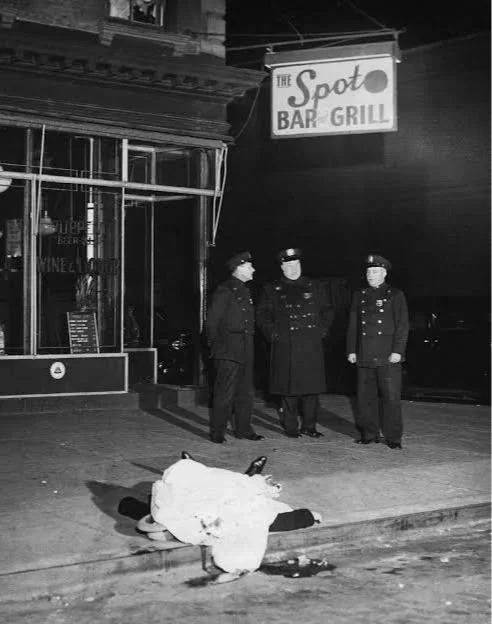
Weegee
1930s — 1940s · New York
Arthur Fellig, known as Weegee, was a self-taught press photographer who spent his nights in New York photographing crime scenes, fires, and the people caught up in them. He used a Speed Graphic camera with a flashbulb, and the images he made were raw, immediate, and unflinching.
The harsh direct flash was not a stylistic choice. It was a practical one. He was working fast, in darkness, with no time to set up.
But the result was something that felt more real than any carefully lit image. The hard shadows, the bleached faces, the shock of the light against the darkness of the street. It created an aesthetic that photographers are still drawing on today.
Weegee understood something fundamental.
The flash does not have to be invisible. It can be part of the story.
What to take from Weegee: direct, unmodified flash is not a mistake. Used with intention, it creates immediacy and truth that softer light cannot replicate.
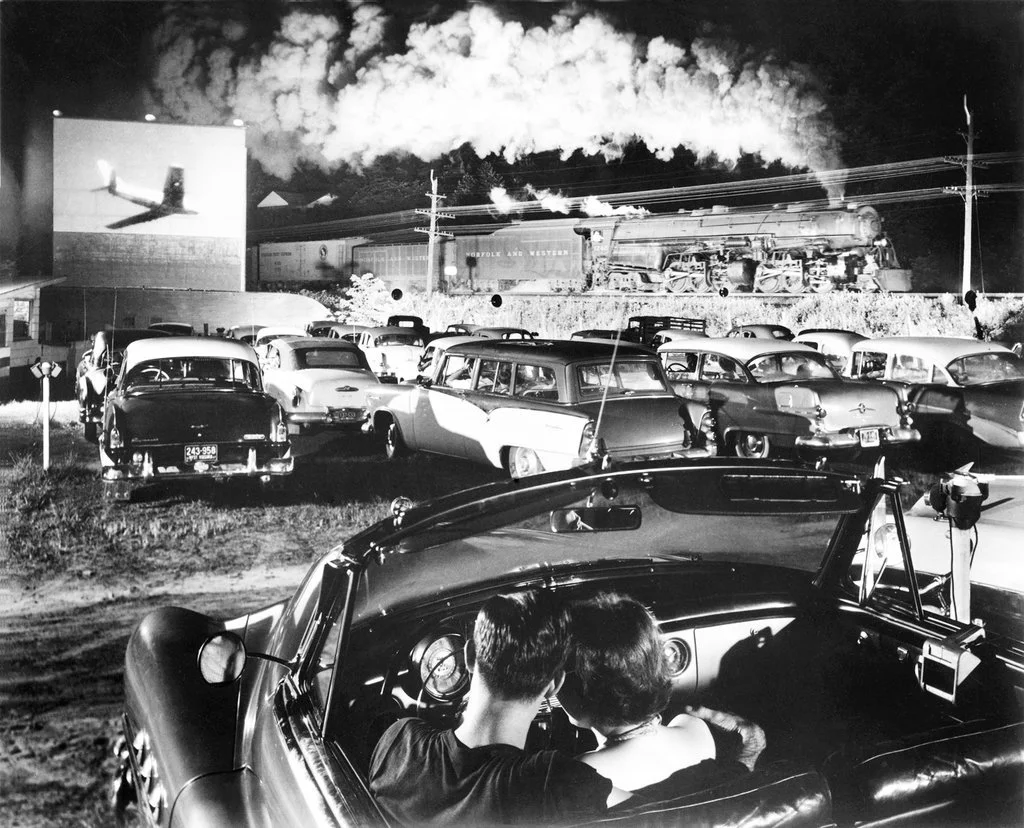
O. Winston Link
1950s · American South
O. Winston Link was a commercial photographer from New York who became obsessed with documenting the last steam railways of America before they disappeared. He worked at night, which meant he had to create all the light himself.
What he built was extraordinary. For some images he synchronised dozens of flashbulbs, rigging them across entire landscapes to light a passing train against the night sky. The technical complexity was staggering, and the results looked like nothing else in photography. Perfectly exposed scenes of ordinary American life, frozen at midnight, lit entirely by flash.
Link proved that flash was not just for portraits and press work. In the right hands, it could illuminate the world.
What to take from Link: flash gives you total control of the light. You are not working with what is there. You are building the light from scratch.
Annie Leibovitz
1970s onwards · USA
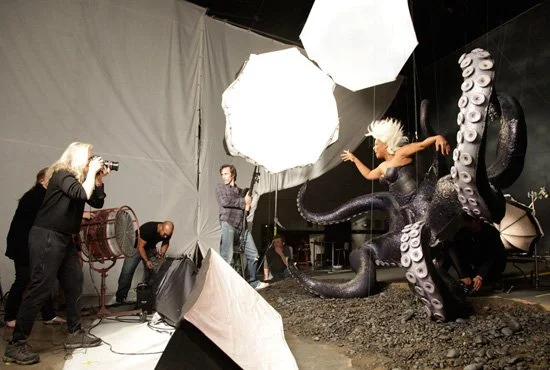
Annie Leibovitz began her career at Rolling Stone magazine shooting musicians on the road. Her early work used flash in a way that felt raw and intimate, close to the subject, direct, honest. As her career developed and she moved into larger editorial and commercial work for Vanity Fair, the flash became more sophisticated but never lost that quality of presence.
What Leibovitz understood was that flash could add drama without feeling artificial. Her portraits have a weight to them. The light is doing something. It is not just illuminating a face, it is shaping how you feel about the person in the frame.
She also showed that flash and ambition belong together. Her biggest, most complex shoots used flash as the central tool, not an afterthought.
What to take from Leibovitz: flash is not a workaround for bad light. It is a creative decision. Use it to shape the mood, not just the exposure.
Martin Parr
1952 – 2026 · UK and worldwide
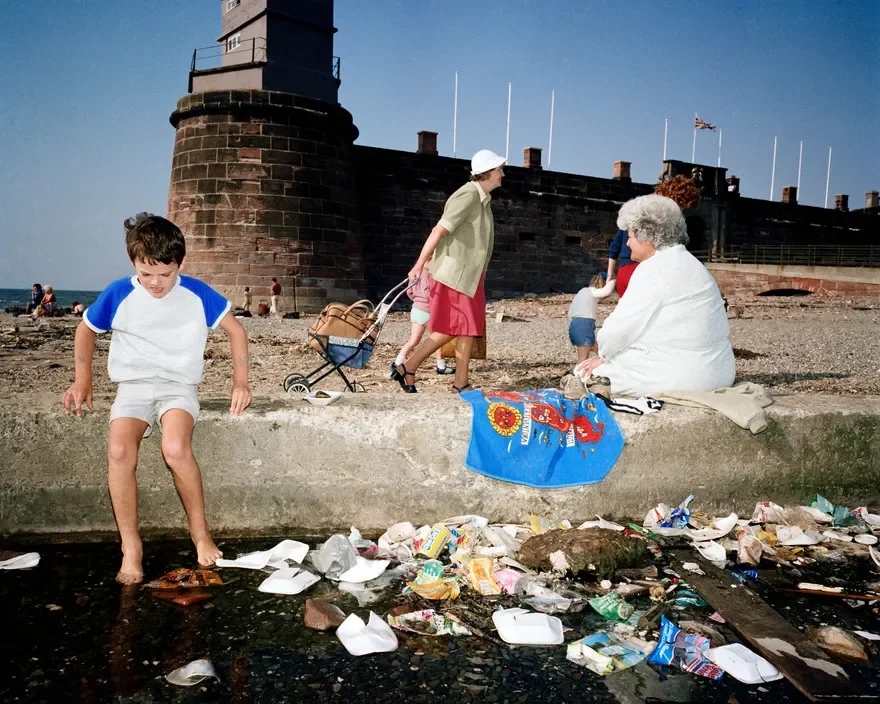
Martin Parr, who passed away earlier this year, used direct flash in daylight. That single decision defined his look. The flash overpowers the ambient light, flattens the depth, saturates the colour, and gives everything that hyper-real quality that made his work so immediately recognisable.
He turned his camera on British seaside holidays, supermarket queues, tourist attractions, and the mundane rituals of everyday life. The flash made the ordinary strange. It made things that should have been comfortable feel slightly unsettling. That was entirely the point.
The Martin Parr Foundation here in Bristol, of which I am a member, holds some of the most significant photography in this tradition. His influence on a generation of photographers is difficult to overstate.
What to take from Parr: flash in daylight changes everything. It removes the expected and replaces it with something that demands a second look.
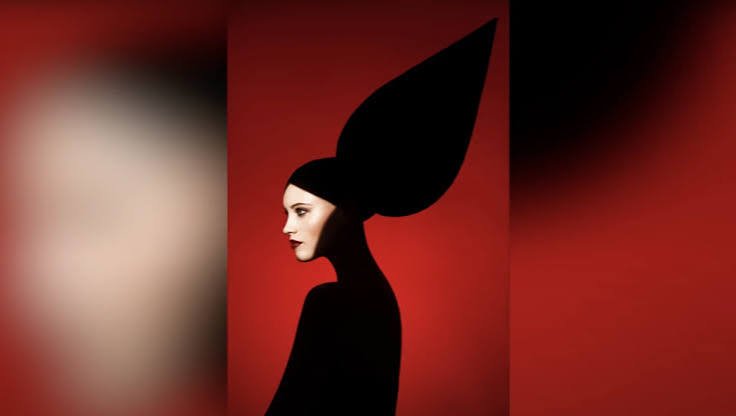
Lindsay Adler
2000s onwards · New York
Lindsay Adler is a New York-based fashion and beauty photographer whose work has appeared in Marie Claire, Elle, Numero, and Harper's Bazaar. Canon named her an Explorer of Light. Profoto gave her their Legend of Light title. In 2020 she became the first woman to win the Rangefinder Icon of the Year award.
What sets Adler apart is her absolute commitment to understanding what light is doing. She uses grids, fresnels, gels, and optical spot modifiers to shape flash with extraordinary precision. Her signature style uses slices and textures of light to create dimension and drama. Nothing is accidental. Everything is controlled.
She has also built one of the most significant photography education careers of her generation, writing five books and teaching on platforms worldwide. She is proof that mastering flash and teaching flash are not separate pursuits. Understanding it deeply enough to shoot it is the same skill as understanding it deeply enough to explain it.
What to take from Adler: flash mastery is learnable. She built her entire career on understanding light precisely and then sharing that understanding with others.
Five photographers. Five completely different approaches. One thing in common.
They all understood what flash could do and used it deliberately. That is the difference between flash as a solution to a problem and flash as a creative tool.